• Skip to primary navigation
  • Skip to main content
  • Skip to primary sidebar
  • Home
  • Login
  • Registration
  • Contact Us
  • Privacy Policy
  • Premium Hosting
  • Affiliate Disclosure

techvideos.net

  • Tech News
    • Personal Tech
    • WIRED Gear
    • TechRadar
  • Our Videos
    • Animation
    • Film Camera
    • Home Tech Videos
    • PC Builder Videos
    • Photography Videos
  • Tech at Amazon.com
  • Jackery Green Energy
  • B & H Photo
    • Webcams at B&H
    • Gaming Desktops at B&H

ASUS ROG Flow Z13 (2025)

by Leave a Comment

 Power Without Limits

The rules of portable gaming just changed. The ASUS ROG Flow Z13 (2025) packs desktop-class performance into a 13-inch 2-in-1 chassis, proving you no longer have to choose between raw power and the freedom to go anywhere.

As an Amazon Associate, I earn from qualifying purchases.

A New Era of Portable Performance

At the heart of the Flow Z13 sits AMD’s groundbreaking Ryzen AI MAX+ 395. This is a true all-in-one powerhouse with 16 cores, RDNA 3.5 integrated graphics, and an NPU delivering up to 50 TOPS of AI compute. This isn’t a compromised mobile chip; it’s a next-generation processor built to handle AAA gaming, creative workloads, and everything in between without breaking a sweat, or a bag strap. Backing it up is a staggering 128GB of LPDDR5X 8000MHz quad-channel memory, dynamically balancing CPU and GPU demands in real time for buttery-smooth gameplay and zero-lag multitasking. A 1TB PCIe Gen 4 SSD ensures your games and files load at blistering speed, while Wi-Fi 7 keeps your connection as fast as your reflexes.
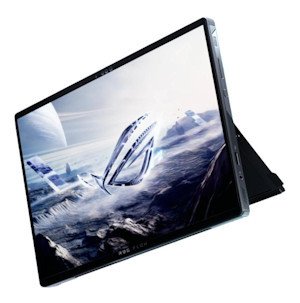
The Display You Deserve

The 13″ ROG Nebula touchscreen is a visual masterpiece: a 16:10 WQXGA (2.5K) panel running at 180Hz with a 3ms response time, PANTONE Validated and covering 100% of the DCI-P3 color space. Whether you’re fragging enemies, editing photos, or streaming your favorite content, every frame is stunningly vivid and silky smooth.

Built to Adapt to Your Life

The Flow Z13 earns its 2-in-1 title. A flexible 170° kickstand lets you shift effortlessly between laptop, tablet, and stand modes.  It’s ideal for gaming on a desk, sketching on a couch, or presenting in a boardroom. A larger touchpad and up to 10 hours of battery life mean you can stay productive and in the zone all day, unplugged.

Cool, Quiet, Relentless

Serious performance demands serious cooling. The Flow Z13 delivers without the noise. A lightweight stainless steel vapor chamber combined with liquid metal thermal compound keeps the Ryzen AI MAX+ 395 running at peak performance while remaining whisper-quiet, even under heavy load.

Ready for Anything

Connectivity is equally impressive: 2x USB 4.0 Type-C, HDMI 2.1, a Micro-SIM card reader, and a dedicated ROG key for quick access to system functions give you everything you need for work, play, and creation. And to kick things off, a free 3-month PC Game Pass unlocks 100+ high-quality titles the moment you power on.

Filed Under: Tech at Amazon.com

FiiO Music Players

by Leave a Comment

FiiO is a Chinese audio company that has built a devoted following among audiophiles and music enthusiasts over the past decade and a half, largely by making high-quality portable music players, often called Digital Audio Players, or DAPs, at prices that undercut many of their competitors while still delivering impressive sonic performance.

Notice: As an Amazon Associate, I earn from qualifying purchases.

The company first gained serious attention with affordable headphone amplifiers and DACs, but it was their foray into standalone music players that really cemented their reputation. The early E and X series devices showed that FiiO understood what listeners actually wanted: long battery life, robust file format support, and clean amplification that could drive even demanding headphones.

The X series became something of a flagship line, with devices like the X5 and X7 earning genuine praise in audiophile circles. The X7 in particular was notable for being one of the first Android-based DAPs from FiiO, which opened up the platform to streaming apps and a far more flexible user experience. This shift toward Android was a meaningful pivot. It acknowledged that modern listeners don’t want to be locked into a single ecosystem and want access to Spotify, Tidal, Qobuz, or whatever service they prefer alongside their local FLAC and DSD libraries.

The M series, which followed, became the company’s main line of players. The M11, M15, and subsequent iterations refined the formula considerably. FiiO invested heavily in their DAC and amplifier implementations, using chips from AKM and ESS Sabre to achieve noise floors and dynamic range figures that would have seemed remarkable in portable devices just a few years earlier. The M15, for example, was a dual-DAC, balanced-output powerhouse that could go toe-to-toe with players costing significantly more from brands like Astell & Kern.

What has always set FiiO apart is their value proposition. A FiiO player at $300 frequently competes with rivals priced at $500 or more. This is partly a function of their manufacturing base in China, but it also reflects a genuine engineering ambition. The company hires serious audio engineers and takes measurements and specifications seriously rather than relying on marketing language alone.

Their more recent players, like the M17 and the M23, pushed further into flagship territory. The M17 introduced something almost unheard of in portable audio: a desktop mode that could draw additional power from a wall adapter to boost amplification output significantly. This blurred the line between a portable device and a desktop setup in an interesting way, acknowledging that some users want one device that travels with them but also sits on their desk at home.

FiiO has also diversified into TWS earbuds, wired IEMs, and Bluetooth receivers, but their music players remain the heart of what the brand stands for. They occupy a unique space — approachable enough for someone stepping up from a smartphone, but capable enough to satisfy dedicated listeners with expensive headphone collections. For anyone interested in getting serious about portable audio without spending a small fortune, FiiO players represent one of the most sensible entry points the market has to offer.

The Fiio Store at Amazon.com

Filed Under: Tech at Amazon.com

Today’s Gaming Updates

by Leave a Comment

Today’s gaming landscape (February 26, 2026) is marked by major industry shakeups at Xbox, legal challenges for Valve, and highly anticipated releases from Capcom and Insomniac. 

Major Industry Headlines

Xbox Leadership Overhaul: Following the recent retirement of Phil Spencer and resignation of Sarah Bond, new Microsoft Gaming CEO Asha Sharma has addressed fans, promising a renewed commitment to players and a stance against “soulless AI slop” in the ecosystem.

Notice: As an Amazon Associate, I earn from qualifying purchases.

Valve Sued by New York: The New York Attorney General has filed a lawsuit against Valve, alleging the company promotes illegal gambling to children and adults through loot boxes in titles like Counter-Strike 2 and Dota 2.

Layoffs at EA’s Skate Studio: Electronic Arts has confirmed layoffs at Full Circle, the studio developing the upcoming Skate reboot. The move is described as a restructuring to “better support the game’s long-term future”.

PlayStation Shuts Down Bluepoint Games: Sony has reportedly closed Bluepoint Games, the renowned studio behind the Demon’s Souls and 

Shadow of the Colossus remakes, roughly five years after its acquisition. 

Upcoming Releases & Previews

Resident Evil Requiem

Capcom’s ninth mainline entry officially launches tomorrow, February 27, 2026, for PS5, Xbox Series X|S, Switch 2, and PC. Global release timings have been revealed, and early reviews are calling it an “excellent” and “glowing” addition to the franchise.

Marvel’s Wolverine

PlayStation has finally confirmed a release date of September 15, 2026, for Insomniac’s upcoming title, positioning it two months ahead of 

Grand Theft Auto 6

Marvel Maximum Collection

A new compilation featuring six classic 8-bit and 16-bit Marvel arcade games, including X-Men: The Arcade Game, was officially revealed today.

Wolfenstein 3

Recent casting calls have surfaced, seemingly confirming that MachineGames is in active development of a new entry in the series, with performance capture reportedly beginning in April. 

Live Service & Community Updates

PlayStation Trials: This weekend, players on PS5 and PC can participate in server trials for two upcoming live service titles: Marathon and 

Horizon Hunters Gathering

Pokémon Presents: A new broadcast is scheduled for February 27, 2026, to celebrate the series’ 30th anniversary. Fans are anticipating updates on Pokémon Legends: Z-A and potential Switch 2 announcements.

Discord Delay: After significant user backlash, Discord is delaying its global age verification rollout (which required facial or ID scans) until the second half of 2026.

Filed Under: Gaming News

The Tiny Revolution

by Leave a Comment

How Mini Desktop Computers Are Quietly Changing the Way We Work

As an Amazon Associate, I earn from qualifying purchases.

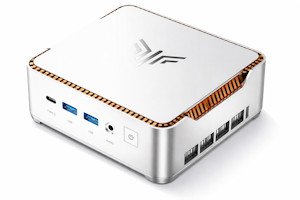
There’s something almost philosophical about a computer that fits in your palm. For decades, the desktop PC was defined by its bulk, tower cases the size of filing cabinets, tangled webs of cables, and a footprint that claimed an entire corner of the room as its own. Then, quietly, something changed. Engineers started asking a different question: not “how powerful can we make this?” but “how small?” The result is the mini desktop computer, a category of machine that has gone from curiosity to cornerstone in a surprisingly short span of time.

The story of mini desktops really begins to pick up momentum in the early 2010s, when Intel introduced its Next Unit of Computing, better known as the NUC. The concept was almost absurdly simple: take the guts of a capable laptop, strip away the screen and battery, and pack what remains into a box roughly the size of a thick paperback novel. Enthusiasts were intrigued. Businesses took notice. And a market was born.

Since then, the category has exploded. Companies like ASUS, Beelink, Minisforum, Apple, and countless others have flooded the space with machines that range from humble media players to workstation-class powerhouses. The form factor has diversified too. Some mini desktops are stubby little cubes. Others are long, flat “stick” computers that plug directly into an HDMI port. Apple’s Mac Mini sits at the elegant end of the spectrum, a sleek aluminum slab that almost doesn’t look like a computer at all. The Raspberry Pi, while a different beast entirely, has introduced an entire generation of hobbyists and students to the idea that serious computing doesn’t require serious size.

What’s driving this miniaturization? The answer is a confluence of forces that have been building for years. Mobile processors have become extraordinarily efficient, delivering performance that would have seemed impossible in such small thermal envelopes even a decade ago. Apple’s transition to its own silicon, the M-series chips, demonstrated to the entire industry just how much performance could be wrung from a tightly integrated, power-conscious design. Suddenly, a computer the size of a Mac Mini could outperform machines that were physically ten times its size. Competitors scrambled to respond.

At the same time, the nature of how most people actually use computers has shifted. Streaming has replaced local media libraries for many users. Cloud storage has reduced the demand for enormous local drives. Web applications handle tasks that once required heavy software installations. For a substantial portion of the population, the raw horsepower of a full tower is simply overkill, and a well-specced mini desktop handles everything they need without breaking a sweat, or a budget.

The practical appeal of these machines is hard to overstate. In an era when urban apartments come at a premium and open-plan offices are the norm, physical space is genuinely valuable. A mini desktop can perch behind a monitor on a VESA mount, turning the display itself into the apparent source of computing power. It can live on a shelf, in a drawer, or tucked discreetly into an entertainment center. For businesses deploying dozens or hundreds of machines, the logistics become dramatically simpler, and the energy savings add up to something meaningful over time.

Home theater enthusiasts have embraced the form factor with particular enthusiasm. A mini PC running a media center application can replace a dedicated streaming device, a Blu-ray player, and a gaming console simultaneously, all while consuming a fraction of the power of a traditional desktop. The living room setup that once required a dedicated cabinet now fits in a single small box tucked behind the television.

There are tradeoffs, of course. Mini desktops are not for everyone, and they ask their owners to accept certain limitations. Upgradeability is often constrained or nonexistent. Many models solder RAM directly to the board and offer only one or two storage slots. Thermal management is a perpetual engineering challenge; pushing high-end components into a small chassis generates heat that has nowhere to go, which is why sustained workloads can sometimes cause these machines to throttle their performance. Connectivity, while generally solid, rarely matches what a full tower can offer in terms of expansion slots and ports.

For power users who run GPU-intensive workloads, 3D rendering, machine learning, video editing at the highest levels, the mini desktop still struggles to compete with larger machines that can accommodate dedicated graphics cards. The laws of physics haven’t been repealed. A desktop GPU is still larger than the entire chassis of many mini PCs, and no amount of engineering cleverness has yet solved that particular equation.

But for the vast and growing middle ground of users, including professionals, students, home users, small business owners, the mini desktop has become one of the most sensible computing choices available. The price-to-performance ratio in this category has never been better, and the competition among manufacturers has driven rapid iteration. Machines that were considered high-end two years ago are now available at entry-level prices.

There’s also something genuinely delightful about these small computers that transcends pure utility. They invite experimentation. A mini PC is easy to move, easy to repurpose, and somehow less intimidating than a full workstation. People build home servers with them, set them up as dedicated gaming machines, use them to learn programming or network administration. The low cost of entry means that buying one to try something new doesn’t feel like a major commitment.

In this way, the mini desktop is doing something its larger predecessors rarely managed: making computing feel accessible and even a little playful. The trajectory of the category points only in one direction. As chipmakers continue to push the boundaries of efficiency, as software becomes better optimized for compact hardware, and as users grow more comfortable leaving heavy computing to the cloud, the argument for a large desktop becomes narrower with every passing year. That doesn’t mean tower PCs are going anywhere. There will always be a market for maximum expandability and maximum power. But the center of gravity in personal computing is shifting, and the mini desktop is a significant reason why. The machine that fits in your palm, it turns out, is more than enough. For most of us, it has been for a while. We’re only now starting to act like we believe it.

Filed Under: Mini PC

ZEISS Otus ML Lenses

by Leave a Comment

As an Amazon Associate, I earn from qualifying purchases

When Craft Meets Pure Image Intent

In a world increasingly dominated by autofocus speed, computational photography, and automated corrections, ZEISS has taken a strikingly different path with its Otus ML lenses. Instead of chasing convenience, the Otus ML series is built around something far rarer in modern photography: intention.

The Otus ML lineup is designed for photographers who want to slow down, take control, and shape every frame with precision. Inspired by the legendary Otus DSLR lenses, these mirrorless primes deliver uncompromising optical performance paired with meticulous mechanical craftsmanship. The result is a lens family that feels less like equipment and more like an extension of the photographer’s creative process.

A Return to Pure Photography

At the heart of the Otus ML philosophy is manual focus. It’s not as a limitation, but a creative advantage. Each lens features a precisely engineered all-metal focus ring that moves with remarkable smoothness, allowing for micro-adjustments that simply aren’t possible with autofocus systems. This tactile experience reconnects photographers with the act of focusing, turning it into a deliberate and satisfying part of image-making.

ZEISS designed these lenses for Sony E, Canon RF, and Nikon Z mirrorless mounts, ensuring compatibility with today’s most advanced camera systems while preserving the classic mechanical feel that many photographers still crave. Electronic contacts provide full EXIF data and camera communication, blending modern functionality with traditional craftsmanship.

Optical Excellence Without Compromise

Optically, the Otus ML lenses are engineered to deliver extreme sharpness, rich micro-contrast, and lifelike color rendition. Advanced optical designs incorporating aspherical surfaces and anomalous partial dispersion glass minimize distortion and chromatic aberration, producing images that appear almost three-dimensional. ZEISS’s renowned T* coating further enhances contrast and suppresses flare, even in challenging lighting conditions.

The current lineup includes 50mm and 85mm f/1.4 primes, with a recently announced 35mm f/1.4 expanding the series. Each focal length offers a unique creative perspective, from environmental storytelling to intimate portraiture, all united by the same optical signature: clarity, depth, and realism.

Built Like a Precision Instrument

Physically, Otus ML lenses feel substantial, solid, and purposeful. Their all-metal construction, weather-sealed design, and precisely machined components reflect ZEISS’s industrial heritage. Even subtle details, such as the blue silicone sealing ring at the mount, signal a commitment to durability and reliability in demanding shooting environments. These lenses are designed to operate in temperatures ranging from freezing winter mornings to scorching summer afternoons, making them dependable tools for professionals and serious enthusiasts alike.

Who Are These Lenses For?

Otus ML lenses are not for everyone. That’s precisely the point. They are made for photographers who value craft over convenience, who enjoy the deliberate rhythm of manual focus, and who want optical performance without compromise. Landscape photographers seeking edge-to-edge sharpness, portrait artists chasing lifelike skin tones and beautiful falloff, and visual storytellers who demand absolute control will find the Otus ML series uniquely rewarding.

These lenses invite photographers to slow down, to observe, and to engage deeply with their subjects. In doing so, they revive something essential about photography itself: the quiet satisfaction of creating an image intentionally, not automatically.

A Modern Classic in the Making

With the Otus ML series, ZEISS has reaffirmed its place at the pinnacle of optical engineering. These lenses don’t merely capture scenes, they translate vision into form with clarity, depth, and emotion. In an era where speed often overshadows craftsmanship, Otus ML stands as a reminder that sometimes, the finest images come from patience, precision, and passion.

Filed Under: Tech at Amazon.com

  • « Go to Previous Page
  • Page 1
  • Interim pages omitted …
  • Page 12
  • Page 13
  • Page 14
  • Page 15
  • Page 16
  • Interim pages omitted …
  • Page 31
  • Go to Next Page »

Primary Sidebar

Search TechVideos

Featured Headlines

Storytelling with Animation – Part 1 of 2

I lost My Watch – Animated Humor

Halloween Fun Party – A Muvizu Animated Comedy

Copyright © 2026 · Metro Pro on Genesis Framework · WordPress · Log in